Pallet Jack Steering Maintenance: Drive Wheel and Knuckle Replacement
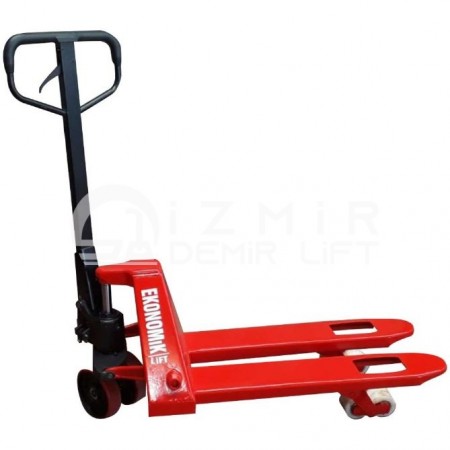
Steering Wheel Replacement in Manual Pallet Jacks: How to Maintain Steering Knuckles and Axle Pins?
When maneuvering a manual pallet jack loaded with heavy industrial goods, the physical energy exerted by the operator is utilized not just for forward momentum, but heavily for steering and trajectory control. Positioned directly beneath the hydraulic pump block, the twin primary steering wheels serve as the epicenter of the vehicle’s mobility. Over time, flattened tires, contaminated bearings, or unlubricated steering knuckles stiffen steering tracking, driving up joint stress for the handler and lowering overall facility throughput.
At Izmir Demir Lift, looking through the operational service guidelines developed for our heavy-duty manual handling fleet manufactured in Manisa, we lay out the steps for steering wheel replacement and pivot assembly maintenance:
1. Step-by-Step Steering Wheel Replacement
When the outer tread (polyurethane or rubber) develops flat spots or the internal precision ball bearings seize, immediate wheel replacement is required:
- Extraction Process: The pump chassis of the pallet jack is safely elevated onto maintenance blocks. The retaining circlips (or split roll pins) securing the central axle shaft are backed out using retaining ring pliers. The axle shaft is tapped outward, freeing the dual wheel assemblies from the housing.
- Axle and Bore Inspection: Before pressing in new components, the steel axle shaft must be audited for straightness deviations. A warped axle induces asymmetric tire wear on brand-new replacements within weeks.
- Reassembly: The replacement wheels are seated into the steering yolk, the axle pin is lightly coated with lithium grease and driven through the center bores, and the structural safety snap rings are locked back into their retention grooves.
2. Steering Knuckle (Thrust Bearing) and Pivot Maintenance
The mechanical architecture that allows the entire hydraulic pump assembly to pivot smoothly on its vertical axis when the operator swings the tiller handle is the steering knuckle. This housing encloses a heavy-duty axial thrust ball bearing.
- The Contamination Hazard: Airborne textile fibers, discarded stretch wrap shreds, and concrete dust migrate into this open pivot joint, absorbing and drying out the factory grease. Crunchy or grinding feedback when turning the handle is a clear indicator of grease starvation.
- The Flushing Routine: During quarterly maintenance, this pivot split should be sprayed out with industrial degreaser to flush away hardened scaling, followed by a fresh injection of high-pressure lithium grease via the integrated Zerk grease fittings.
3. Aligning Wheel Compounds to Your Facility Floors
Selecting the correct tread compound during an overhaul vastly extends your maintenance intervals:
- Polyurethane (PU) Wheels: The premium choice for cured epoxies and smooth warehouse concrete. They deliver near-silent travel, leave no scuff marks, and maintain exceptionally low rolling resistance.
- Polyamide (Nylon) Wheels: Tailored for chemical processing zones, wet washdown floors, and heavy foundries. The composite material is incredibly hard and completely immune to flat-spotting, though it runs loud on rough floors.
- Elastic Rubber Wheels: Engineered to dampen shocks across broken, unlevel, or outdoor asphalt surfaces. While providing a soft ride, their wear rate is inherently higher under capacity limits.
Industrial Trend of the Day: Throughout current 2026 ergonomic facility and occupational safety audits, maximizing handler safety has pushed the adoption of "Low Starting Resistance" specialized polyurethane steering wheels. These advanced compounds reduce the initial physical breakaway torque required to initiate a turn by up to 30%, minimizing shoulder strain. The 2-year service warranty provided by Izmir Demir Lift completely spans our cast steering yolks and master thrust bearing configurations, securing light, responsive, and fatigue-free tracking for your fleet.
